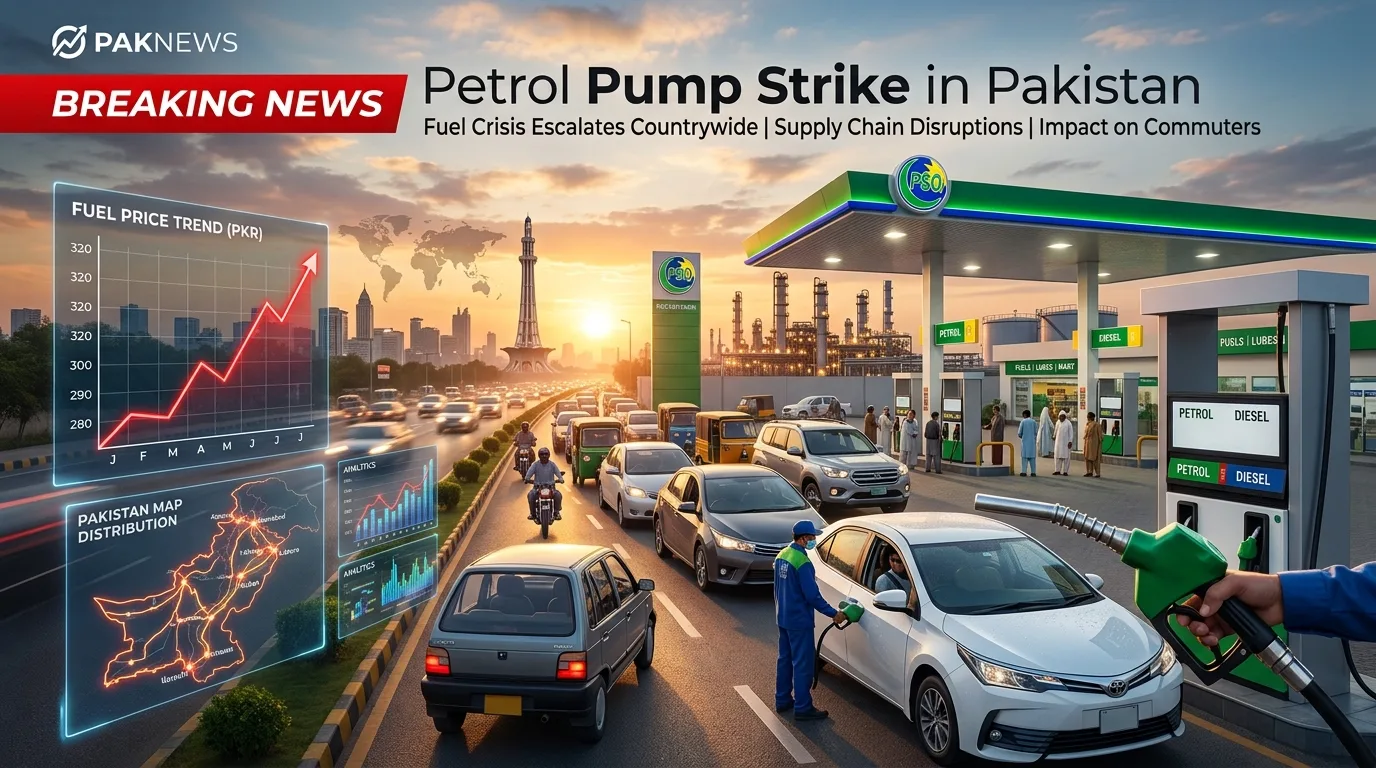
Petrol Pump Strike in Pakistan: Latest Prices & Next Prices Prediction
Petrol pump owners across Pakistan threatened a nationwide shutdown this week after talks with the federal government over the new daily fuel-pricing system broke down, but the strike has now been put on hold. At Ogra Fuel Prices In Pakistan, we provide reliable information about petrol prices, diesel rates, OGRA announcements, government updates, and fuel availability. This guide explains the current strike situation, today’s petroleum prices, expected future price changes, and the factors that influence fuel prices in Pakistan.
Petrol Pump Strike in Pakistan Today
The All Pakistan Petrol Pumps Owners Association (APPPOA) announced an indefinite nationwide strike on July 21, 2026, after unsuccessful negotiations with the Petroleum Minister. The strike was set to shut down fuel stations across all provinces, raising concerns of a fuel crisis. However, after further talks on July 22, the government assured it would address dealer concerns within two weeks, leading APPPOA and the Pakistan Petroleum Dealers Association (PPDA) to suspend the strike. The situation remains under observation, as a failure to resolve the dispute could lead to a renewed strike.
Strike Timeline
| Date | Development |
| July 17 | OGRA officially shifts from fortnightly to daily petroleum pricing |
| July 21 | Talks between APPPOA and Petroleum Minister fail; nationwide strike announced |
| July 21 (night) | PPDA holds separate meeting; undecided on joining the strike |
| July 22 | Fresh negotiations with Petroleum Minister Ali Pervaiz Malik |
| July 22 (evening) | Strike deferred for two weeks; PPDA also backs the agreement |
| July 23 | Petrol pumps open nationwide; daily pricing continues on a trial basis |
Today’s Petrol Price in Pakistan
Under Pakistan’s new daily pricing mechanism, OGRA now notifies fresh rates every 24 hours instead of once every two weeks. Here are the latest officially notified rates. These rates were notified by the Petroleum Division on the recommendation of OGRA and apply nationwide, including Karachi, Lahore, Islamabad, Rawalpindi, Multan, Faisalabad, Peshawar, and Quetta. OGRA does not regulate High-octane (Hi-Octane) fuel, so its price can vary slightly between filling stations.
| Fuel Type | Current Price | Previous Price | Change | Change | Effective Date |
| Petrol (Motor Spirit) | 379.31 | 382.02 | -2.71/L | decrease | 22 October 2026 |
| High-Speed Diesel (HSD) | 390.11/L | 389.80/L | +0.31L | increase | 22 October 2026 |
| Light Diesel Oil (LDO) | 266.41/L | 272.29/L | – | – | 22 October 2026 |
| Kerosene Oil | 330.14/L | 329.54/L | – | – | 22 October 2026 |
Note: Because prices now change daily, the figures above reflect the most recent OGRA notification at the time of writing. Always check the “Official Sources” section below for the live notification.
Petrol Price History in Pakistan
| Date | Petrol Price (Rs/L) | Diesel Price (Rs/L) | Change | Reason |
| October 22, 2026 | 379.31 | 390.11 | -2.71/+0.31 | Middle East tensions, rising Brent crude |
| July 22, 2026 | 320.73 | 367.21 | ▲ 4.93 / ▲ 7.15 | Strait of Hormuz disruption, higher import costs |
| July 18, 2026 | 316.15 | 354.35 | ▲ 5.44 | International oil market movement |
| July 17, 2026 | — | — | Policy change | Shift from fortnightly to daily pricing mechanism |
Next Petrol Price Prediction
Predicting the next petrol price in Pakistan has become harder and more important. Since the switch to daily pricing. Based on current trends, here’s what to watch:
- Likely direction: Prices are more likely to rise than fall in the short term, as long as the Iran–US conflict keeps pushing international crude prices higher.
- International crude: Brent crude has climbed sharply, trading above $95 a barrel in the past week, its highest level in nearly six weeks as the Strait of Hormuz remains disrupted.
- Exchange rate: Since oil is purchased in US dollars, any rupee weakening will add further upward pressure on pump prices.
- Government taxes: The Petroleum Levy (currently Rs. 80/litre on petrol and Rs. 70.82/litre on HSD) and the Climate Support Levy (Rs. 5/litre) are unchanged for now but could be adjusted if the government needs additional revenue.
Important: These are estimates based on current market conditions, not confirmed figures. OGRA decides the next official rate each night, and it becomes final only once notified.
Factors That Can Change the Next Petrol Price
- Brent crude prices have risen above $95 per barrel due to the US-Iran conflict, marking a multi-week peak.
- The Strait of Hormuz continues to face disruptions, affecting shipping routes and elevating freight and insurance costs.
- A weaker Pakistani rupee against the US dollar increases the cost of imported fuel, even if international prices remain stable.
- Decisions by OPEC+ members regarding production can impact global supply and Pakistan’s import costs.
- Changes in government taxation policies, such as the Petroleum Levy or Climate Support Levy, directly influence fuel prices.
- Seasonal factors and domestic demand, particularly during summer travel and harvest times, can lead to slight increases in fuel consumption.
When Is the Next Petrol Price Announcement?
Under the new mechanism introduced on July 17, 2026, petrol and diesel prices are reviewed daily, not fortnightly as before.
- Who calculates it: OGRA, using a rolling average of international petroleum product prices (Arab Gulf Platts), freight costs, and the USD/PKR exchange rate.
- When it’s announced: Rates are finalized late at night and become effective from 12:00 AM (midnight) the same day.
- Approval process: Under the daily mechanism, OGRA is authorized to notify routine daily adjustments without prior cabinet approval, allowing prices to track global markets in near real time. Larger policy changes still go through the Petroleum Division and federal cabinet.
Why Are Petrol Pumps on Strike?
Dealers say they are being squeezed from two directions:
- Fixed commission, not a percentage. Petrol pump owners currently earn a flat dealer margin of around Rs. 8 per litre. As pump prices climb, this fixed commission buys less relative to their operating costs. APPPOA is demanding a percentage-based commission instead, so dealer income scales with the price of fuel.
- Opposition to daily pricing. Dealers argue that revising prices every 24 hours — instead of every two weeks — makes it almost impossible to manage inventory and cash flow. They say they often buy fuel at one price and are forced to sell it at a lower notified price the next day, absorbing the loss themselves.
APPPOA leadership said dealers have been absorbing losses for two to three months and accused the government of using small daily increases to soften public reaction while shifting the financial burden onto pumps, oil marketing companies, and refineries. The government, in response, pointed to more than Rs. 100 billion spent since late February 2026 to cushion consumers from the full impact of the international price surge, and promised to review dealer margins within two weeks.
Why Petrol Pumps Are Closed in Pakistan Somewhere
| Pump Network | Status |
| PSO (Pakistan State Oil) | Open |
| Shell Pakistan | No |
| Total PARCO | Open |
| Attock Petroleum | Open |
| Other private/government-linked pumps | Open |
Petrol dealers’ strike: Petrol pump owners or dealer associations may temporarily close stations to protest issues such as dealer margins, pricing policies, or other business concerns. During a strike, not every station closes—some continue operating.
- Low fuel stock: A station may temporarily close if it has run out of petrol or diesel and is waiting for a new fuel delivery.
- Local operational issues: Pumps may close due to equipment maintenance, power outages, staff shortages, or other operational problems.
- Safety or regulatory reasons: Authorities may temporarily shut down a petrol pump if it does not meet safety standards or regulatory requirements.
- Business decisions: Some privately owned pumps may close temporarily because of financial or management reasons.
- Opposition to daily fuel price revisions: Dealers say changing petrol prices every day creates uncertainty and makes it difficult to manage inventory and sales. They want prices to continue being revised on a monthly schedule instead.
- Dealer commission dispute: Pump owners argue that their commission has not kept pace with rising operating costs. They are demanding an increase or a percentage-based commission system.
- Higher operating costs: Dealers say expenses such as electricity, salaries, rent, and maintenance have increased significantly, making it harder to operate profitably under the current commission structure.
- Lack of consultation: Association representatives say the government introduced the daily pricing mechanism without adequately consulting petrol pump owners
Are all petrol pumps closed?
No. Even during a strike, many fuel stations remain open. Company-operated outlets and stations that choose not to participate in the strike often continue selling fuel. Availability can vary by city and locality.
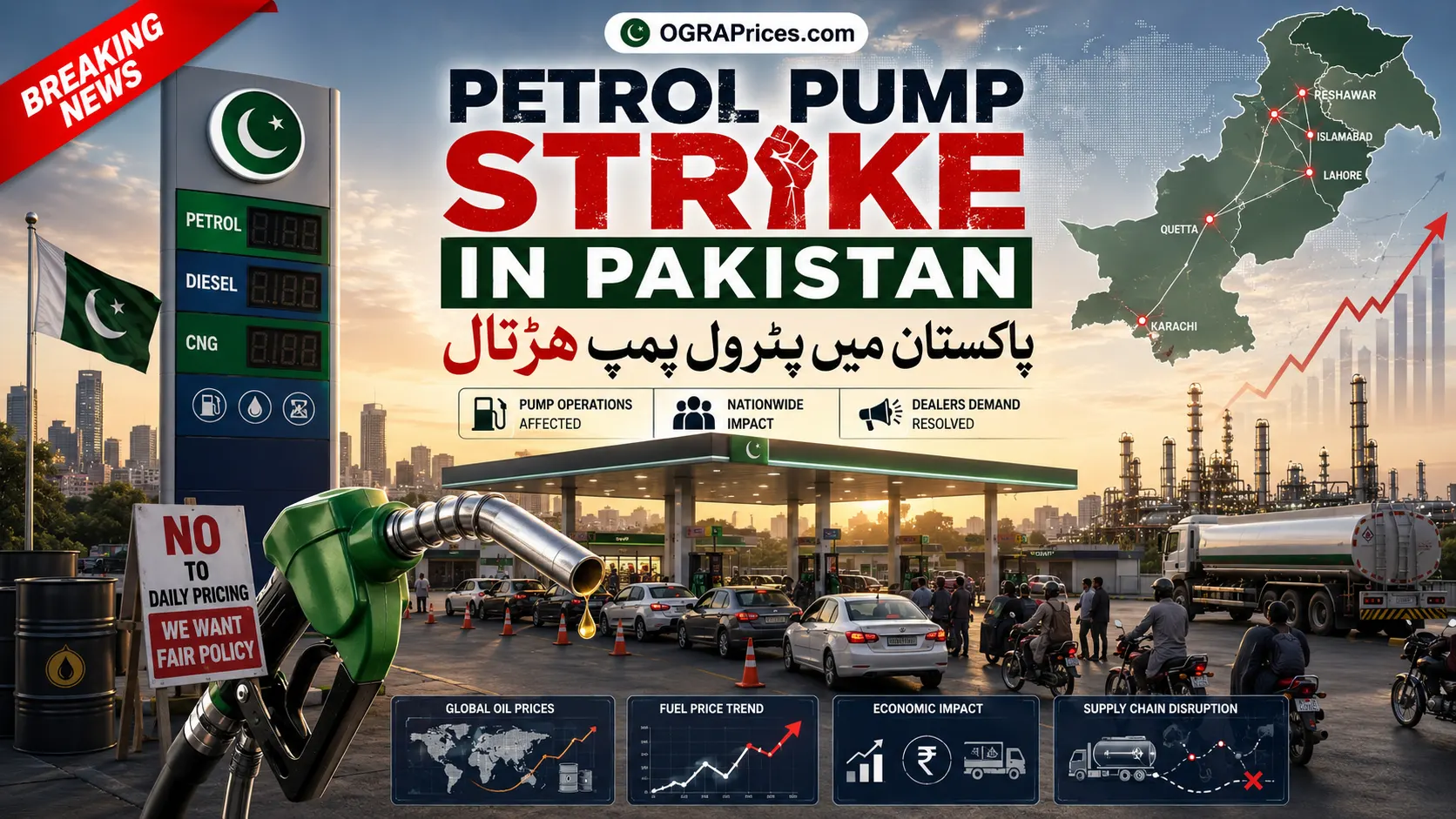
The Latest Reported Fuel Availability in a Specific City
Based on the latest reported situation, the petrol pump strike is not affecting every city in the same way. Fuel availability depends on whether local dealers are participating in the strike and whether company-operated stations remain open. Reports indicate that government negotiations have kept many outlets operational, although some independent pumps are closed in certain areas.
| City | Fuel Availability | Strike Impact | Expected Situation |
| Karachi | Mostly Available | Low | Most major fuel stations continue operating. |
| Lahore | Mostly Available | Low to Moderate | Fuel available at many stations; some independent pumps may be closed. |
| Islamabad | Available | Low | Most petrol pumps remain open with normal fuel supply. |
| Rawalpindi | Available | Low | Company-operated stations continue serving customers. |
| Faisalabad | Partially Available | Moderate | Some private pumps may participate in the strike, while others remain open. |
| Multan | Limited in Some Areas | High | One of the most affected cities, with reports of several petrol pumps closing. |
| Peshawar | Partially Available | Moderate | Fuel is available, but some local stations may be affected. |
| Quetta | Partially Available | Moderate | Availability varies by locality and station operator. |
| Hyderabad | Mostly Available | Low | Most stations continue normal operations. |
| Bahawalpur | Partially Available | Moderate | Some independent dealers may have suspended sales temporarily. |
| Sialkot | Mostly Available | Low | Fuel is generally available at major filling stations. |
| Gujranwala | Mostly Available | Low | Most petrol pumps are operating normally. |
How Petrol Prices Are Calculated in Pakistan
Pakistan imports the vast majority of its petroleum needs, so the pump price is built up from several layers:
- International product price: The base cost of petrol/diesel on the Arab Gulf market, tracked via a 7-day rolling (Platts) average.
- Exchange rate: Since crude and refined products are traded in US dollars, the strength of the Pakistani rupee directly affects the rupee cost of every litre.
- Freight and import premium: Shipping costs to bring fuel into Pakistani ports, which rise sharply during regional conflicts that disrupt shipping lanes like the Strait of Hormuz.
- Petroleum Levy: A fixed government levy, currently around Rs. 80 per litre on petrol and Rs. 70.82 per litre on HSD.
- Climate Support Levy (CSL): An additional levy of Rs. 5 per litre on petrol, diesel, and high-octane fuel.
- Dealer/distributor margin: The commission paid to petrol pump owners and oil marketing companies, currently around Rs. 8 per litre, the exact figure at the center of the current dispute.
OGRA combines these components into a formula-based calculation and recommends the final ex-depot price to the Petroleum Division, which is then notified to the public — now on a daily basis instead of every two weeks.
Impact of the Petrol Pump Strike
Even a short or threatened strike ripples across the economy:
- Public transport: Bus and wagon operators face fuel shortages and higher costs, which often translate into fare hikes or reduced routes.
- School vans and rickshaws: Small operators running on thin margins are hit hardest by both the strike risk and the underlying daily price increases.
- Ride-hailing services: Drivers on platforms like Careem and inDrive face squeezed earnings when fuel costs rise faster than fares.
- Businesses and logistics: Trucking and freight companies pass higher diesel costs on to the price of goods, affecting supply chains nationwide.
- Food prices and inflation: Higher transportation costs for perishables and staples typically feed into food inflation within days of a fuel price hike.
- Factories and manufacturing: Industries relying on diesel generators or fuel-dependent logistics see production costs rise.
Official Sources for Petrol Prices
For the most accurate, up-to-date information, always cross-check with:
- Oil and Gas Regulatory Authority (OGRA) – official daily price notifications
- Ministry of Energy, Petroleum Division – government press releases and policy announcements
- Pakistan State Oil (PSO) – Pakistan’s largest oil marketing company
Latest Government Announcements
- Petroleum Minister Ali Pervaiz Malik confirmed that dealer grievances over commission structure and the daily pricing mechanism will be reviewed within two weeks.
- The government says it has spent over Rs. 100 billion since late February 2026 to partially cushion consumers from the full impact of rising international oil prices, including subsidy support for vulnerable segments of society.
- The daily pricing mechanism, introduced on July 17, 2026, will continue on a trial basis during the two-week negotiation window with APPPOA and PPDA.
- Both major dealer associations — APPPOA and PPDA — have publicly backed the current truce, reducing the near-term risk of a nationwide shutdown.
Conclusion
The petrol pump strike in Pakistan has been suspended for two weeks as dealers and the government negotiate over commission disputes and daily pricing mechanisms. Current fuel prices are Rs 379.31 per litre for petrol and Rs. 390.11 per litre for diesel, with potential fluctuations linked to the Middle East conflict affecting international oil prices. Supply is stable for now, but the situation may change. It’s advised to follow official updates from OGRA and the Petroleum Division rather than social media rumors.
Frequently Asked Questions
Is the petrol pump strike still active?
No. The nationwide strike called by APPPOA has been suspended/deferred for two weeks as of July 22, 2026, following talks with the Petroleum Minister. Petrol pumps are open across Pakistan.
What is today’s petrol price in Pakistan?
As of 22 October 2026, petrol is priced at Rs. 379.31 per litre and High-Speed Diesel at Rs. 390.11 per litre, as notified by OGRA.
When is the next petrol price announcement?
Under the new daily pricing mechanism, OGRA reviews and notifies rates every night, effective from midnight. Previously, prices were revised only once every two weeks.
Will petrol prices increase next time?
It depends on international crude prices, the rupee-dollar exchange rate, and government levies. With Brent crude trading above $95 a barrel amid the Iran conflict, further increases are possible in the near term, though this is not guaranteed.
Why are petrol pumps protesting?
Petrol pump owners are demanding a percentage-based dealer commission instead of a fixed per-litre margin, and want the government to reconsider the shift from fortnightly to daily fuel pricing.
Which petrol pumps are open?
All major networks — PSO, Shell, Total, PARCO, Attock, and others — are currently open and operating normally since the strike has been suspended.
How often are petrol prices updated?
Since July 17, 2026, prices have been updated daily. Before that, OGRA revised prices on a fortnightly (every two weeks) basis.
Who decides petrol prices in Pakistan?
OGRA calculates and recommends prices based on international benchmarks, exchange rates, and levies. The Petroleum Division/Ministry of Energy formally notifies the rates. Routine daily adjustments no longer require prior cabinet approval.
Is diesel price changing too?
Yes. High-Speed Diesel (HSD) is revised alongside petrol under the same daily mechanism and is currently priced at Rs. 424.92 per litre.
How can I check official fuel prices?
Check OGRA’s official price notifications or the Petroleum Division’s releases. This page is updated regularly to reflect the latest confirmed rates.